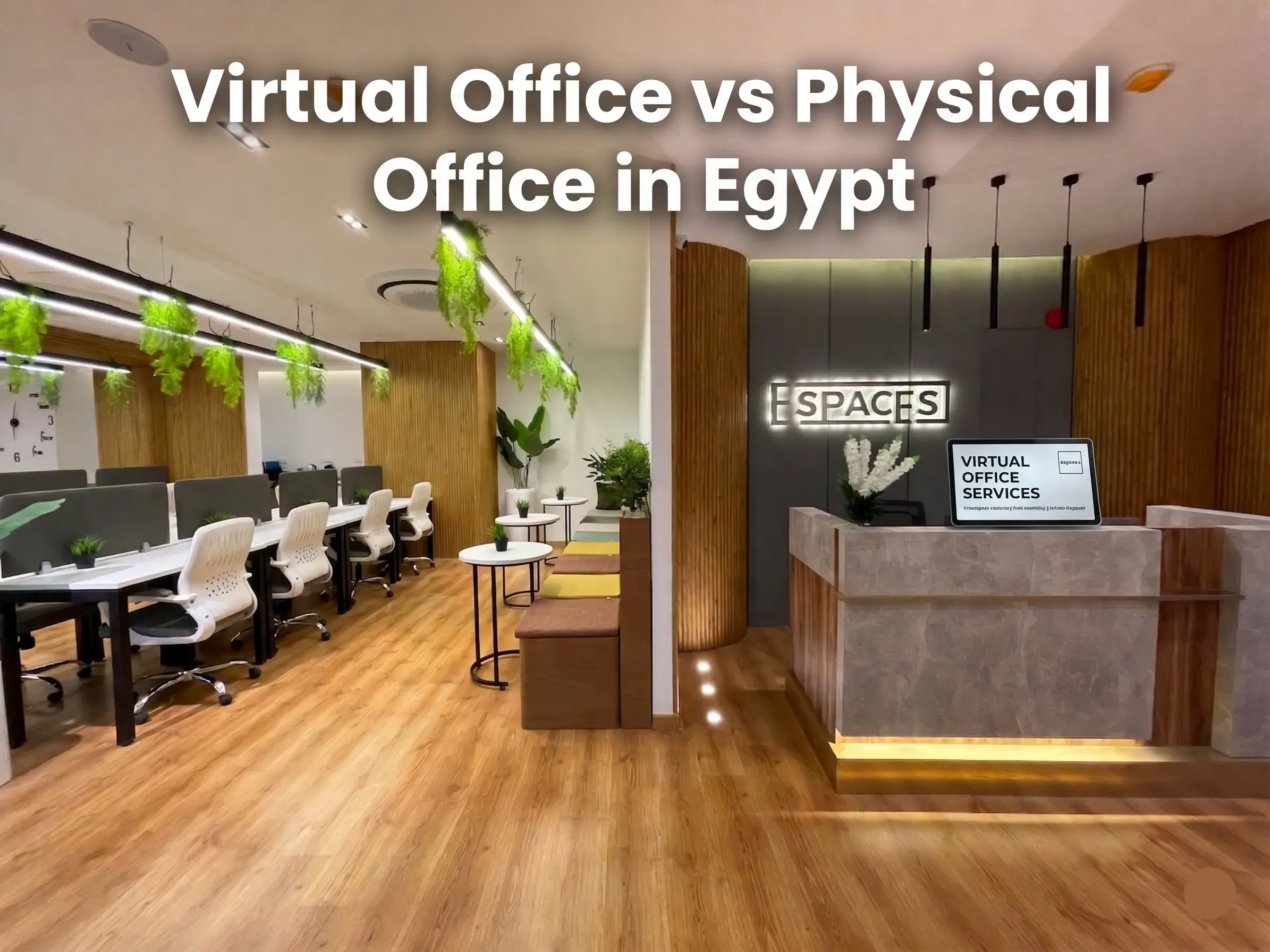
Virtual office vs physical office is a common comparison for businesses trying to balance flexibility, cost, and operational needs.
Understanding the difference between virtual and physical address setups helps companies decide how to establish their presence while managing resources efficiently. Each option offers distinct advantages depending on how a business operates, scales, and interacts with clients.
What is the Difference Between a Virtual Office and a Physical Office?
The main difference lies in how businesses operate and present themselves.
A virtual office provides a legal business address and professional presence without requiring a full-time physical workspace.
In contrast, a physical office is a dedicated location where teams work daily.
While virtual offices focus on flexibility and cost efficiency, physical offices prioritize collaboration, structure, and in-person operations.
The right choice depends on whether the business needs presence, workspace, or both.
Transition to an asset-light model with an Espaces Virtual Office, providing your team with a professional business address and smooth operations without the cost of a physical space.
What is a Virtual Office and How Does it Work?
A virtual office allows businesses to register and operate using a professional address without maintaining a physical workspace.
This is especially useful for companies that work remotely or operate across multiple locations.
How Does It Work?
Businesses subscribe to a service that provides:
- A legal business address
- Mail handling and administrative support
- Access to meeting rooms when needed
This model enables companies to maintain credibility while minimizing operational costs.
The Pros and Cons of Virtual Offices
Advantages:
- Lower operational costs
- No need for physical office maintenance
- Flexibility for remote or distributed teams
- Easy market entry with a registered address
Limitations:
- Limited physical presence for daily operations
- Less direct team interaction
- May require additional space for meetings or collaboration
What is a Physical Office and Why is it Still Important?
A physical office is a dedicated workspace where employees operate on a daily basis.
It provides structure, consistency, and a central location for team collaboration.
Despite the rise of remote work, physical offices remain important for businesses that rely on in-person communication, team alignment, and client-facing interactions.
They also reinforce company culture and operational control.
The Pros and Cons of Physical Offices
Advantages:
- Strong team collaboration and communication
- Consistent work environment
- Better control over operations and workflows
- Stronger client-facing presence
Limitations:
- High setup and operational costs
- Long-term lease commitments
- Limited flexibility for scaling or downsizing
Virtual Office vs. Physical Office: A Strategic Comparison
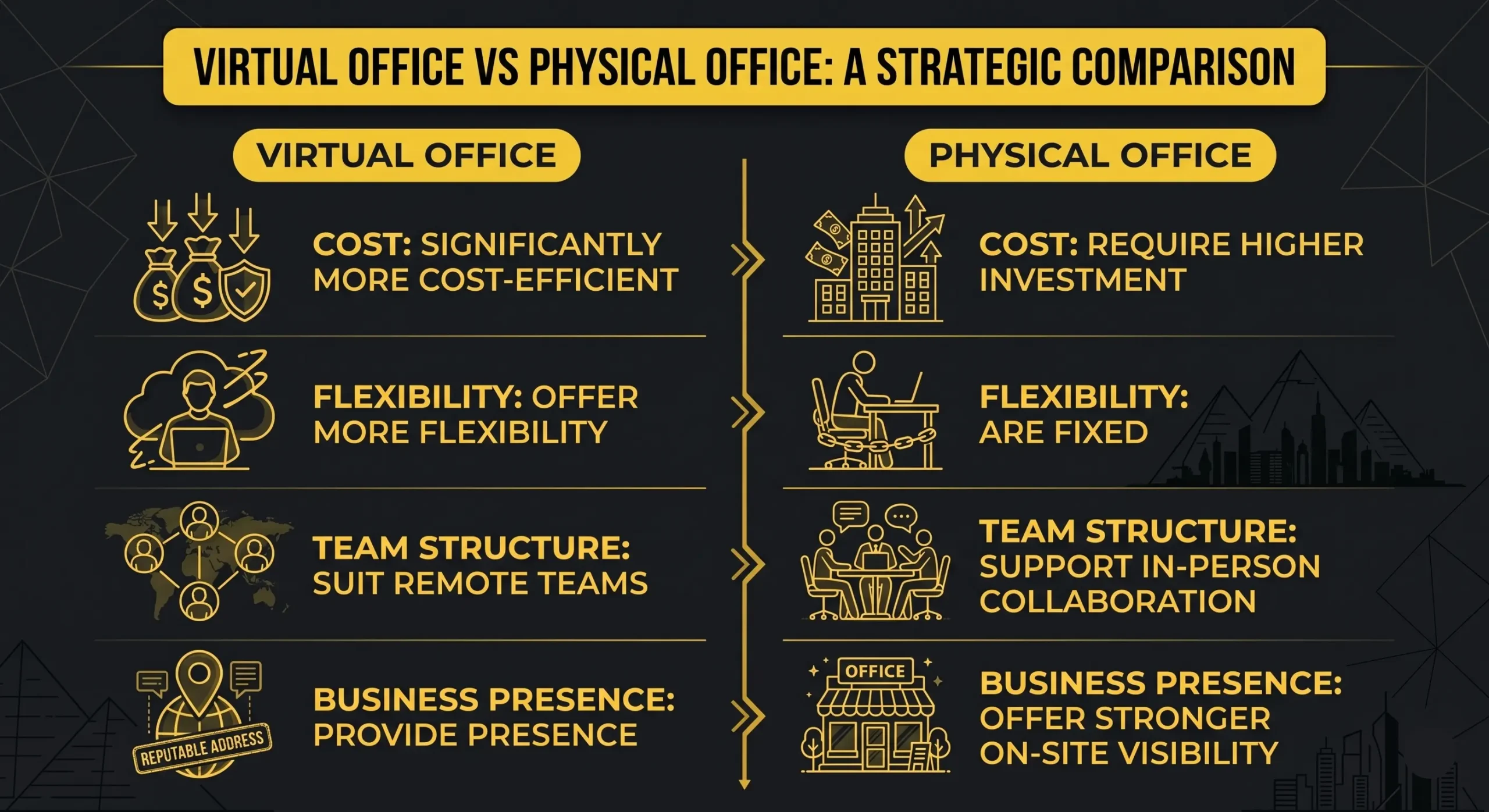
Cost:
Virtual offices are significantly more cost-efficient, while physical offices require higher investment.
Flexibility:
Virtual setups offer more flexibility, whereas physical offices are fixed.
Team Structure:
Virtual offices suit remote teams; physical offices support in-person collaboration.
Business Presence:
Both provide presence, but physical offices offer stronger on-site visibility.
Hybrid Solutions: Can You Start Virtual and Move to Physical?
Many businesses start with a virtual office and transition to a physical workspace as they grow.
This hybrid approach allows companies to minimize risk during early stages while maintaining the option to expand later.
By starting with a virtual setup, businesses can establish their presence and test their operations before committing to a full-time office.
As team size and operational needs increase, moving into a physical office becomes a natural next step.
Which is Right for Your Business: Virtual or Physical?
The decision depends on how your business operates.
- Choose a virtual office if you prioritize cost efficiency, flexibility, and remote operations.
- Choose a physical office if your team requires daily collaboration and a structured environment.
Businesses should evaluate their current needs while considering future growth to make the right choice.
Why Espaces is the Strategic Bridge Between Virtual and Physical Offices
Espaces offers solutions that support virtual workspace needs, allowing businesses to transition smoothly between them.
Companies can start with a legal business address and scale into private offices or meeting spaces as their operations grow.
This flexibility makes it easier to align workspace strategy with business development without unnecessary risk.
FAQs
What is the main difference between a virtual and physical office?
A virtual office provides a business address without a physical workspace, while a physical office is a dedicated location for daily operations.
Can a virtual office be used as a legal address?
Yes. Virtual offices typically provide a registered business address for company setup.
Are physical offices still necessary?
Yes, especially for businesses that require team collaboration and in-person operations.
Is a virtual office more cost-effective?
Yes. It significantly reduces setup and operational costs.
Can a business switch from virtual to physical later?
Yes. Many businesses start virtually and transition to physical offices as they grow.
To sum up, choosing between a virtual and physical office depends on how a business operates, its stage of growth, and its long-term goals.
While virtual offices offer flexibility and cost efficiency, physical offices provide structure and collaboration.
Understanding the difference between virtual and physical address setups allows businesses to make informed decisions and adopt workspace solutions that support both current operations and future expansion.