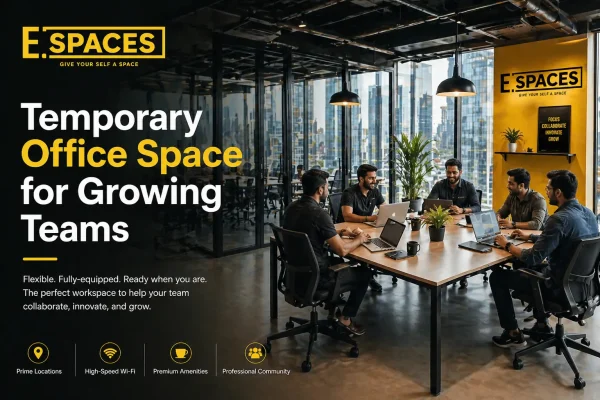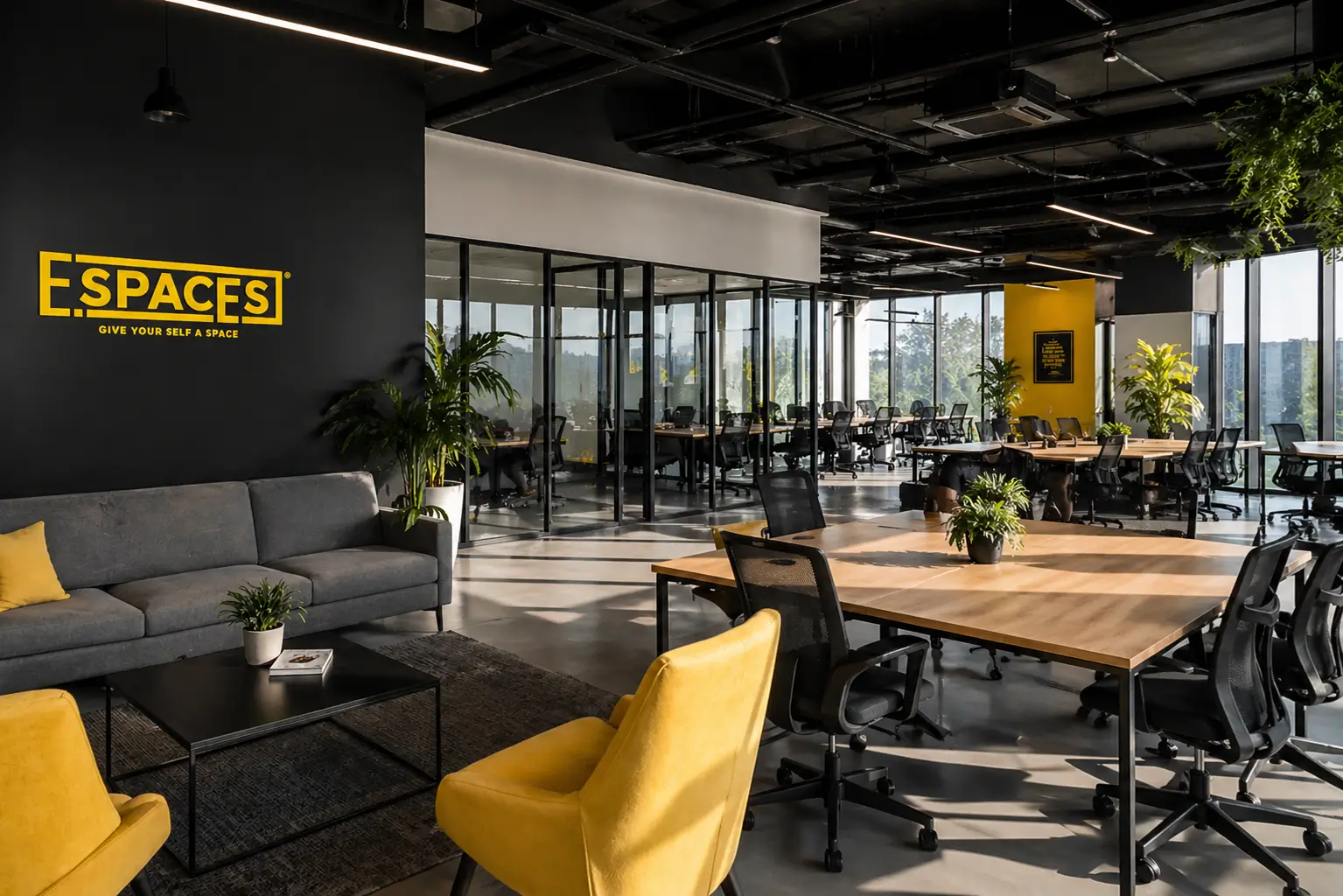
Types of coworking spaces vary to match different work styles, business needs, and levels of flexibility.
From open shared areas to private offices and virtual setups, each option serves a specific purpose depending on how individuals and teams operate.
Understanding these options, along with What is a coworking space?, helps businesses choose a setup that supports productivity, growth, and cost efficiency without unnecessary commitments.
What are the different types of coworking spaces?
Coworking spaces are not one-size-fits-all. Different businesses and professionals choose workspace types based on how they operate, their team size, and their need for flexibility or privacy.
Open Shared Spaces (Hot Desks & Dedicated Desks)
Flexible work areas where individuals can work without committing to a private office, Ideal for freelancers, remote workers, or anyone needing a productive space on demand.
Private Offices for Growing Teams
Fully enclosed office spaces designed for teams that need privacy, structure, and a consistent work environment without managing a traditional office.
Ready to Move In?
- [Shared Space] – Perfect for individuals and freelancers.
-
[Private Office] – Secure, branded offices for teams of all sizes.
Virtual Offices for Business Address & Credibility
A solution for companies that need a legal business address and professional presence without operating from a physical workspace.
Corporate & Professional Workspaces
Custom workspace solutions tailored for established companies that require scalable, branded, and structured environments.
Meeting & Training Rooms on Demand
Bookable spaces for meetings, presentations, workshops, and corporate sessions, available when needed without long-term commitments.
Book Your Next Session! Professional Meeting Rooms and Training Rooms equipped with high-speed internet and premium presentation tech.
This variety allows businesses to choose a workspace model that matches their current stage and operational needs rather than adjusting their operations to fit a fixed office structure.
Coworking Space Examples:
When to switch your setup?
Understanding coworking space examples helps businesses identify the right time to move from one setup to another.
For example, freelancers often start with shared desks to reduce costs, while startups may transition to private offices once they begin hiring and expanding their operations.
Another common example is remote teams using coworking spaces only a few days per week to maintain structure and productivity outside of home environments.
Businesses that frequently meet clients also switch to coworking spaces to improve their professional image without investing in permanent offices.
The decision to switch is usually driven by changes in workload, team size, or the need for a more structured and professional environment.
Coworking spaces make this transition easier because they allow businesses to scale up or down without long-term commitments or financial pressure.
How to choose the right office type for your startup?
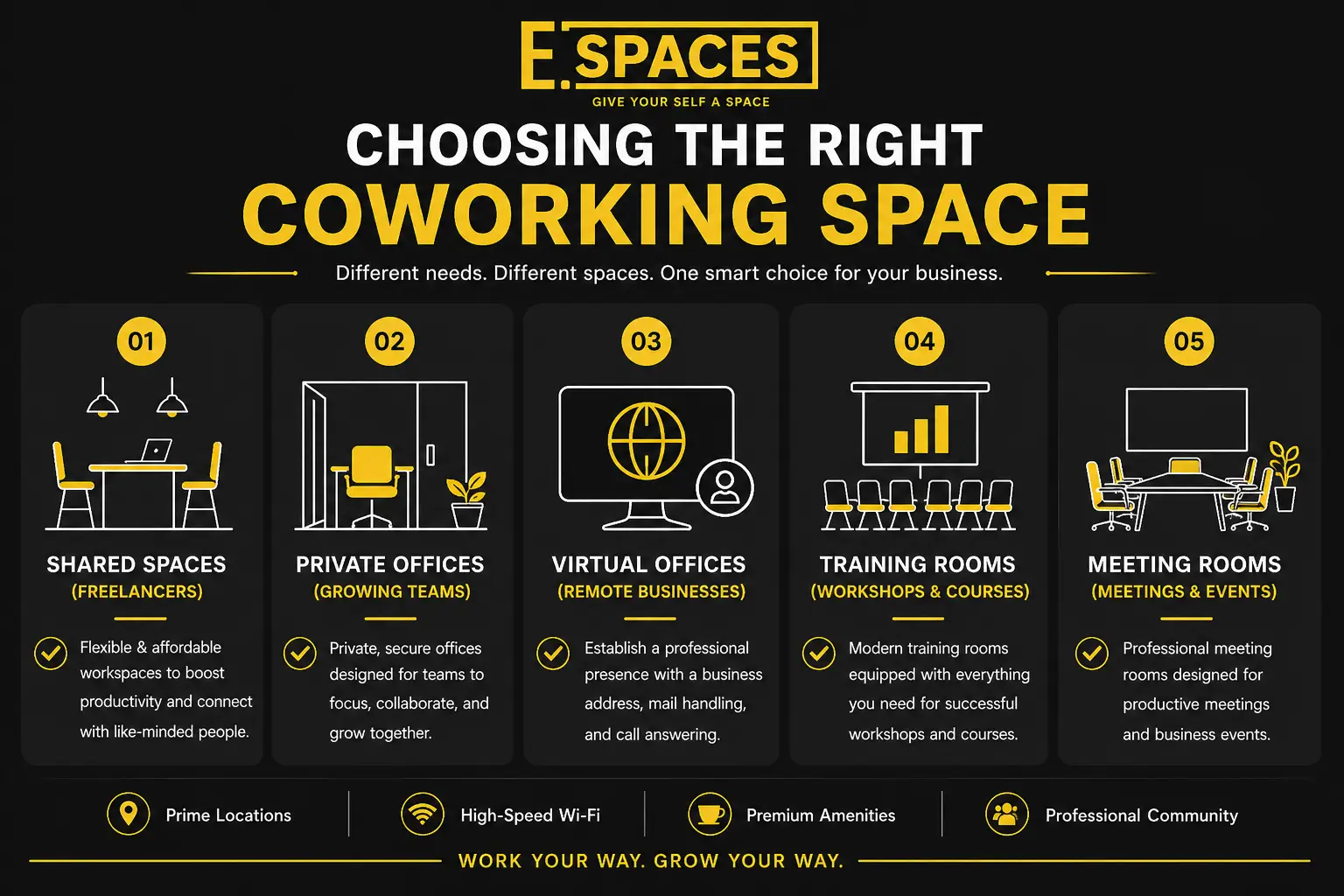
Selecting a workspace is a strategic move that directly impacts your overhead and team performance. To find the perfect fit, match your choice with your current business milestone:
-
Shared Coworking Spaces: The go-to for bootstrapping and early-stage startups. Coworking spaces for startups offers maximum affordability and networking opportunities without long-term risk.
-
Private Office Suites: Ideal for growing teams that need a dedicated, branded environment. This setup provides the privacy and structure required for professional collaboration.
-
Virtual Office Solutions: Perfect for remote-first startups that require a professional business address and legal presence without the cost of a physical desk.
-
Custom Corporate Solutions: Best for established startups looking to scale rapidly. These flexible models allow you to expand your footprint instantly as your headcount grows.
Instead of fitting your team into a rigid lease, a flexible coworking model adapts to your business, allowing you to scale up or down without financial penalties.
Why flexible workspaces are better than traditional offices?
Traditional leases often come with long-term financial burdens and operational headaches. Switching to a flexible model allows you to redirect your capital from “rent and maintenance” to “growth and innovation.”
-
Zero Upfront Investment: Skip the heavy costs of furniture, IT setup, and fit-outs. Access a ready-to-use environment from day one.
-
Operational Agility: Scale your space based on real-time demand. Expand during peak periods or downsize without the financial penalties of a corporate office space for lease.
-
Risk Mitigation: Eliminate the stress of 3-5 year commitments. Flexible terms give you the freedom to pivot as the market changes.
-
Focus on What Matters: We handle the utilities and office management, while you focus on your team’s productivity and coworking space vs working from home balance.
Final Thoughts: Choosing Your Ideal Setup
Ultimately, the best choice depends on your current business stage and operational goals. Whether you need the collaborative energy of a shared area, the professional focus of a private suite, or the legal anchor of a virtual presence, there is a model built for your success.
By exploring various coworking space examples, you can find a solution that balances professionalism with cost efficiency, ensuring your workspace supports your growth rather than limiting it.